The Table Is the Movement

Elderware | Monday, April 7, 2026
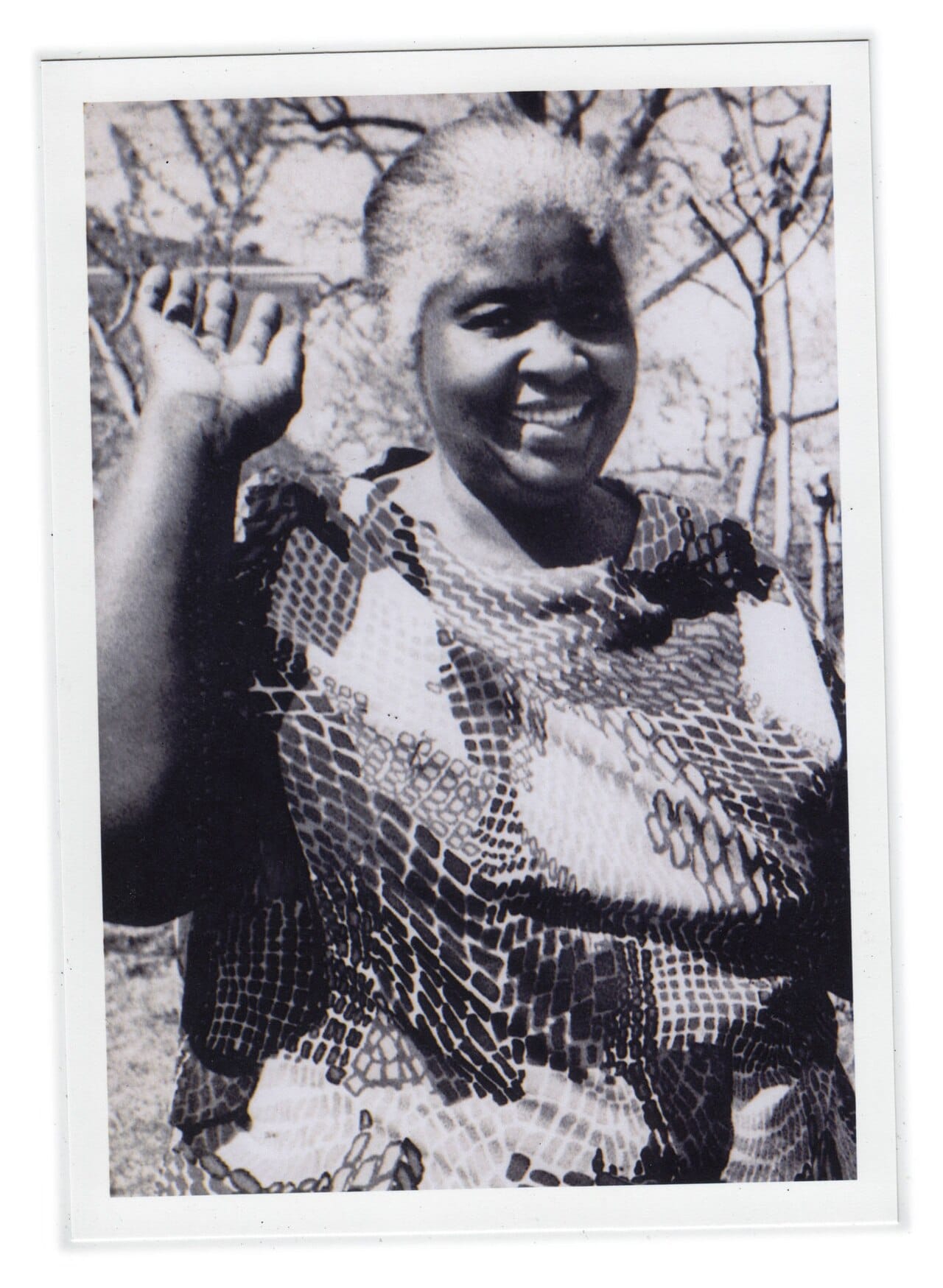
Georgia Gilmore lost her job on a Tuesday. By the following weekend she was cooking out of her kitchen on Dericote Street in Montgomery, Alabama, feeding the people who were walking to work rather than riding buses that humiliated them. The crowds waiting for plates of pork chops and stuffed bell peppers served as cover. Dr. King and the other leaders of the Montgomery Improvement Association could hold their strategy sessions in plain sight, behind the smell of food, behind the ordinary human fact of hungry people being fed.
Nobody called it organizing. It was dinner.
Gilmore recruited other Black women — women whose grandmothers had been born into slavery, women who could be fired or evicted if their names appeared in the wrong place — and set them to cooking and selling food at beauty salons, cab stands, and churches across the city. She called the group the Club from Nowhere, because when white officials asked where the Montgomery boycott's money was coming from, the answer was: nowhere you'd think to look. The proceeds paid for the cars and wagons and gasoline that kept 381 days of boycott moving.
She used the stove as a platform. The kitchen was the command center. The food was the movement.
I've been thinking about this because of two things happening in my life.
I'm helping with the Horizon's Project's efforts to thwart our creeping authoritarianism here with various organizing efforts, but specifically with evolving a food based national campaign related to economic justice. Of the 1000 ways our clueless banana republic leadership in Washington is failing us, actually assisting us with our further descent into scarcity living is one of the main ones. So we have in mind gathering people around food, borrowing from many historical traditions but also from successful current local projects like the Equitable Dinners of the Out of Hand Theater in Atlanta.
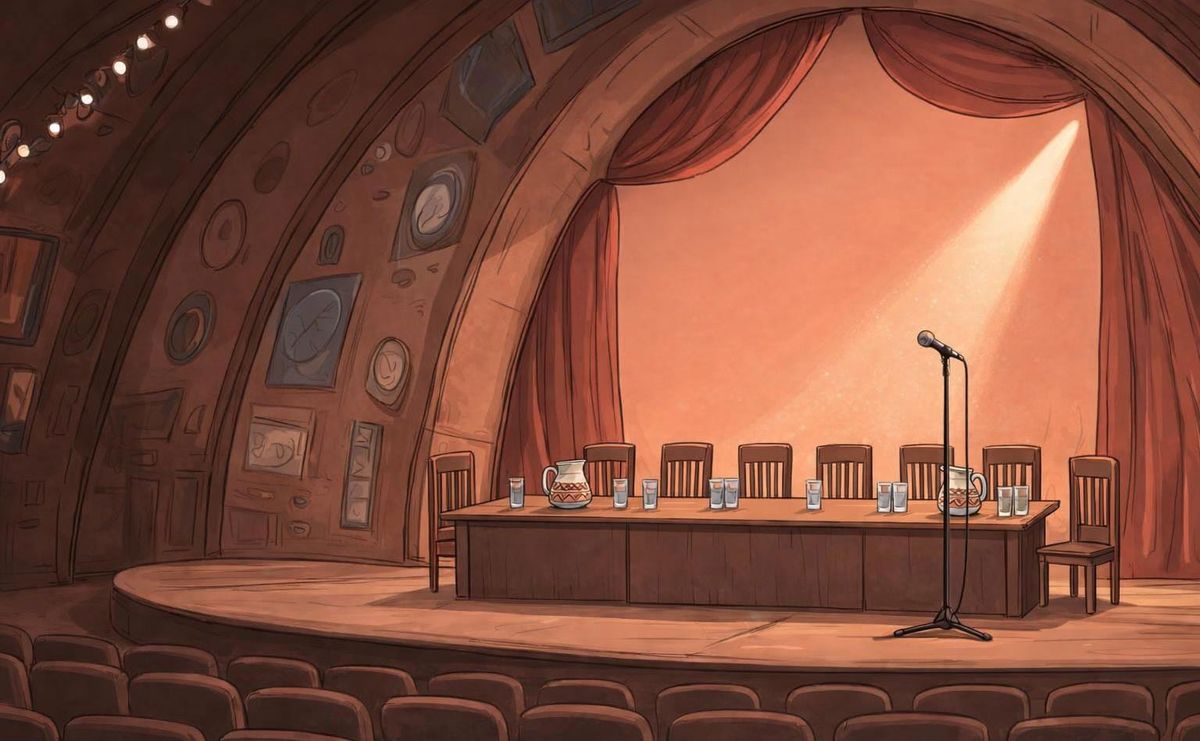
As my road testing this type of project I will be attaching a dinner to something I am calling, La Mesa: A Santa Fe Story Exchange. On May 23 we'll gather at the Center for Contemporary Art for a newfangled story slam meets the story circle. Six tellers, two facilitators, a table and an audience. We listen, we react, we open ears and model feedback, and then invite the audience for a conversation. My plan is following the event, I'll be hosting a dinner at my co-housing community, as a fundraiser for our local Burrito Brigade, a wonderful mutual aid organizing effort here in town. That event will help us hone in on a model for our national campaign into the summer and fall leading up to our mid-term elections in November. Never more important to organize, and that gave me some additional food for thought regarding how this relates to my aging project with Elderware.
There's a long tradition of this kind of convergence of food and organizing that I don't think gets named often enough.
When the UFW was learning to organize in the early 1950s, the method Fred Ross taught those early organizers was called the house meeting. You found someone in a neighborhood willing to invite their neighbors in. You sat in their living room. You ate whatever the host put out. You listened before you talked. The house meeting built the Community Service Organization chapter by chapter through Mexican-American neighborhoods of San Jose, and then the UFW used the same method to build what became the United Farm Workers. Twelve hundred members before anyone went on strike. Person to person. Kitchen to kitchen.
I remember being part of one in Texas as a child to support the grape boycott.
What I can say, is for that campaign, the food wasn't incidental. As a potluck or a provided meal, people came to these house parties expecting more than political nourishment. It was often the reason people came in the door. It was the reason the conversation lasted long enough to matter.
At Paschal's restaurant in Atlanta, Robert and James Paschal provided free food and meeting space to King, John Lewis, Andrew Young, and whoever else needed a table. Lewis said later that some of the decisions that shaped the direction of the country were made there, over fried chicken and collards. The restaurant was safe because it was popular. You couldn't shut down a place that half the city loved without setting off a different kind of movement.
The Black Panther Party ran free breakfast programs for children in Oakland and elsewhere through the 1970s. J. Edgar Hoover considered the breakfast program one of the greatest threats to the state — more dangerous than the marches, more dangerous than the speeches — because it tied material care directly to political consciousness. When you feed someone, you are making a claim about whose life matters.
How might this be related to the future of story work and aging? I think it is obvious. Many of us are at home with the protocol of hosting. A life of serving food for groups large and small means we have the skills. Many of us are also natural facilitators of equitable conversations. What the elders in the examples above knew — and what I think elders in general carry — is a different relationship to time.
Young organizers tend to want the meeting that produces the plan that leads to the action. The elders I've known tend to understand that the meal is the meeting. That trust is built slowly, in repeated proximity, over shared food. That you cannot shortcut the relationship-building and expect the movement to hold. That the potluck is not preparation for the work — it is the work.
The anthropologist Mary Catherine Bateson wrote about what she called "adulthood II" — the decades after 60, freed from the productivity demands of earlier life, available for a different kind of attention. She thought these years were the ones in which people could most fully practice what she called "active wisdom": noticing patterns across long spans of time, holding complexity without needing to resolve it, being present to what matters without the urgency of ambition distorting the view.
The kitchen is a good place for that kind of wisdom.
La Mesa is perhaps where it all resolves.
Perhaps The World Ends Here by Joy Harjo
This poem captures my feeling about why this is such a central argument for organizing with food. She writes:
The world begins at a kitchen table. No matter what, we must eat to live.
The gifts of earth are brought and prepared, set on the table. So it has been since creation, and it will go on.
See complete poem on Poetry Foundation
Brooke and I saw Joy at a reading here in Santa Fe where this poem stuck with us. And I'll be damned if we didn't go out a buy ourselves the most amazing dinner table afterwards. We understood how tables make meaning in community. We gather to advance causes, but also to listen to each other. I sit here writing at that very same table, hoping to encourage you to gather folks to eat and discuss the ways we can expand economic justice and mutual aid.
Let me know if I can connect you to this effort.
The La Mesa Story Development Workshops are two Saturdays, April 11, and May 2 at the Santa Fe Public Library. Free and open to the public. The La Mesa public event and Burrito Brigade organizing potluck is May 23 at CCA Santa Fe.
Learn about both at the Center for Contemporary Arts.
If you're in Santa Fe, let me know. If you're not,let me know about how you might want to plug into the Horizon's Project efforts, and if there is a Burrito Brigade equivalent is in your city — what the mutual aid group is, what the story exchange is, and whether anyone has thought to put them in the same room.